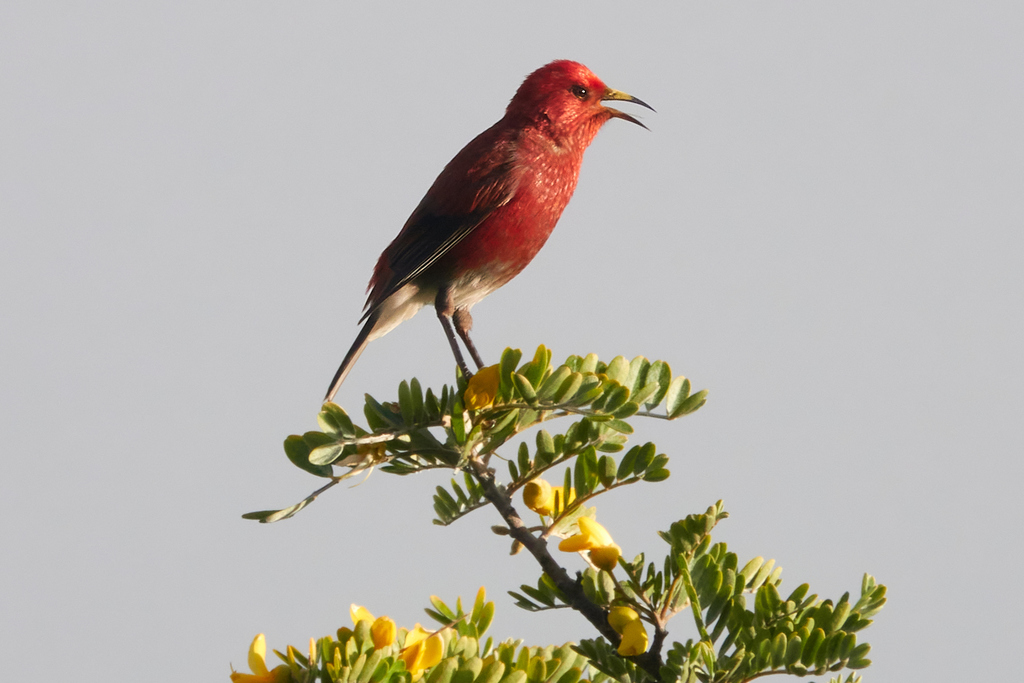
Sightings of Apapane are most often reported in December through March. Across the United States and Canada, observations are most concentrated in Hawaii, with 1,303 records documented in the past 12 months.
Where Apapane Has Been Reported
GBIF observations across the United States & Canada
United States
Canada
Shading ranks the places where Apapane has been reported, from fewest to most GBIF records. Tap a place for details.
Top places to see Apapane
- 1. Hawaii55,154 records
When to See Apapane
Most often reported in December through March.
| Month | Recorded Sightings | Peak Month |
|---|---|---|
| January | 5,607 | Yes |
| February | 5,707 | Yes |
| March | 6,620 | Yes |
| April | 4,446 | No |
| May | 4,540 | No |
| June | 4,384 | No |
| July | 4,344 | No |
| August | 3,571 | No |
| September | 3,159 | No |
| October | 4,266 | No |
| November | 3,662 | No |
| December | 5,121 | Yes |
Apapane is a small, crimson Hawaiian honeycreeper with a white belly and undertail, black wings and tail, and a curved dark bill. It is the most abundant and widely distributed honeycreeper, found on Hawaii, Maui, Lanai, Kauai, Molokai and Oahu. It forages in the canopy of ohia trees, sipping nectar from the red blossoms. Look for it in montane forest, where flocks make a mix of whistles and buzzes.
Track Apapane on iPhone
Download the WildMap app to see recent sightings within 100 km (200 km with Pro), get alerts when wildlife is spotted nearby, and log sightings to your life list.
Similar Species to Spot




Related Field Guides & Apps
Frequently Asked Questions
When is the best time to see a Apapane?
Apapane sightings are most often reported in December through March, based on GBIF records. Reports partly reflect when more people are outdoors, so they can be seen in other months too.
Where can I see a Apapane?
The highest numbers of Apapane records have been documented in Hawaii. Check our state and provincial sighting maps above for local hotspots.
How can I find Apapane sightings near me?
Use WildMap to scan recent sightings near your location. A free scan shows recent iNaturalist and eBird reports within 100 km from the past 7 days (WildMap Pro: 200 km and 30 days), and you can turn on alerts for sightings near you.