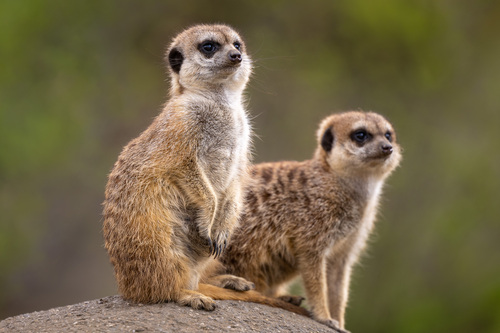
Meerkat (Suricata suricatta) has 1,996 GBIF records worldwide, most from South Africa, Botswana and Namibia, peaking July through October.
Where It's Recorded
Top countries by GBIF observation records worldwide
- 1. South Africa →1,216 records
- 2. Botswana →200 records
- 3. Namibia →176 records
- 4. Germany →40 records
- 5. United States22 records
- 6. Angola5 records
- 7. Brazil →2 records
- 8. Spain →2 records
- 9. Netherlands →2 records
- 10. Belgium →1 records
- 11. Canada1 records
- 12. China →1 records
- 13. Czechia →1 records
- 14. United Kingdom →1 records
When it's recorded
Most often reported in July through October.
| Month | Recorded Sightings | Peak Month |
|---|---|---|
| January | 113 | No |
| February | 130 | No |
| March | 133 | No |
| April | 133 | No |
| May | 152 | No |
| June | 155 | No |
| July | 157 | Yes |
| August | 191 | Yes |
| September | 154 | Yes |
| October | 216 | Yes |
| November | 145 | No |
| December | 121 | No |
A slender, long-legged mongoose with sandy grey fur, dark bands across the back, dark patches around the eyes and a pointed tail. It lives in the dry open country of southern Africa, including the Kalahari, in colonies that share burrows. Groups dig for insects, scorpions and small reptiles. Look for them in the morning, standing upright on their hind legs, while one sentinel scans for predators.
Track Meerkat on iPhone
Download the WildMap app to see recent sightings within 100 km (200 km with Pro), get alerts when wildlife is spotted nearby, and log sightings to your life list.
Similar Species to Spot




Related Field Guides & Apps
Frequently Asked Questions
Where is Meerkat found?
Meerkat records on GBIF are most heavily concentrated in South Africa, Botswana and Namibia. In total, 1,996 records have been documented worldwide.
When is Meerkat most often seen?
Meerkat is most often recorded in July through October, based on GBIF records worldwide. Records partly reflect when more people are outdoors, so it can be seen in other months too.
Can I track Meerkat with WildMap?
WildMap scans recent iNaturalist and eBird reports around you or a place you search. A free scan covers 100 km and the past 7 days (WildMap Pro: 200 km and 30 days), so you can see whether Meerkat has been reported nearby.